
H5N1: THE UNACCEPTABLE RISK OF QUAIL HUNTING

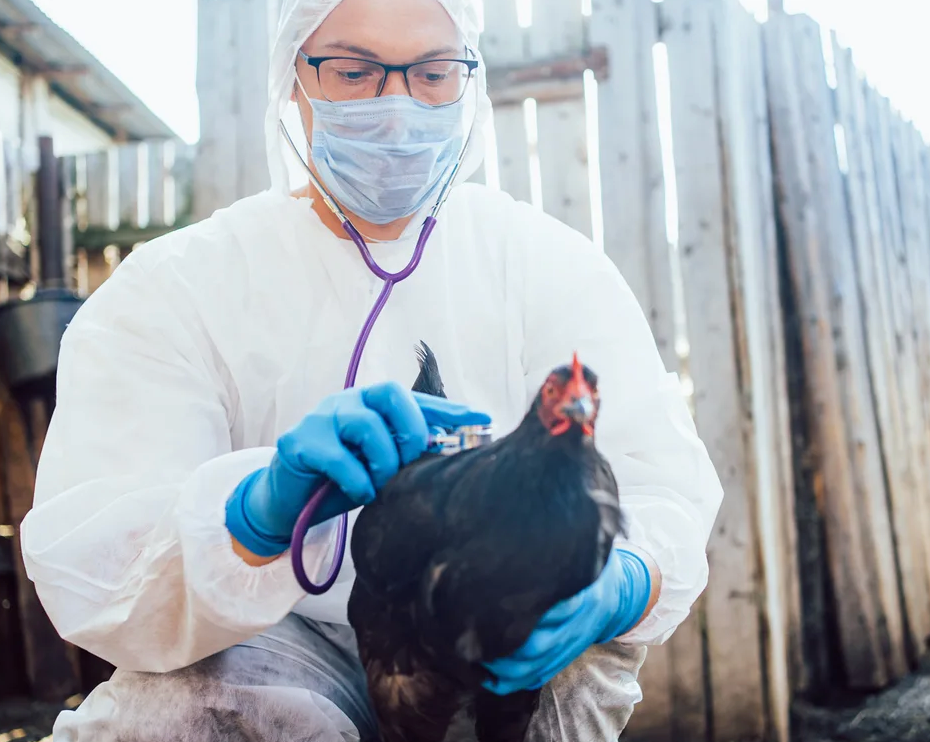
The world's most devastating avian influenza has just hit Australian shores.
What our governments do or don't do now, will have far-reaching consequences for our wildlife, agriculture industries and potentially human health.
Left: photo from a compelling article in BBC's The Science Focus
Core Message
It was never a question of if, but when. The world’s most devastating avian influenza has now hit Australian shores.
Given its ability to travel long distances fast, if the virus is not already in other states like Victoria and South Australia, it could be so in under 48 hours.
H5N1 poses an existential threat to Australian agriculture and wildlife – many species already classed as threatened.
“Recreational” native quail hunting – currently taking place in Vic and SA - is an extremely high-risk activity.
For reasons of biosecurity containment, ecological preservation, and human health monitoring, governments must act immediately. Recreational quail hunting must be suspended before hunters, their vehicles and dogs, become inadvertent vectors in the spread of a disease that has devastated wildlife populations and livelihoods around the globe.
Our governments must act now.
In particular, the law in Victoria enables Minister Erdogan and Minister Settle to act immediately.
The Unique Danger to Quail
Like chickens and turkeys, Quail lack genetic resistance to the virus.
Quail suffer extreme & rapid mortality rates, with a flock mortality rate of up to 100%, often dying within 24 to 48 hours.
Agriculture Victoria explicitly lists quail as high-risk. H5N1 typically causes widespread multi-organ failure in quail, leading to sudden death often without any prior observable symptoms. [1, 2, 3]
Several Australian quail species are already threatened, and there are growing concerns for the little native Stubble Quail, which is still legally shot for "recreation" in Victoria. Government population estimates rely on controversial modelling that extrapolates counts of a few hundred birds into estimates of millions. Victorians around the state report that quail are noticeably becoming more scarce. Despite this, nearly 200,000 quail are bagged by hunters in Victoria each year, with tens of thousands more injured and left to die.
The Unacceptable Risk of Continued Quail Hunting
High risk Vectors of Transmission (Hunters and Dogs)
The highly contagious H5N1 virus can live for long periods in water, mud, and organic debris. Hunters moving across wetlands, damp grasslands and agricultural properties risk transporting the virus on their boots, vehicles, and clothing, accelerating geographical spread. [1, 2]
Gundog Exposure: creates a direct transmission pathway into domestic households. [1, 2, 3]
Masking Natural Surveillance
Early detection of the virus depends on the public and wildlife officials identifying clusters of sudden, unexplained wildlife deaths, but Quail mask symptoms – making it virtually impossible to detect until it’s too late.
Compounding Pressures on Fragile Ecosystems
Past Precedents in Victoria
The Victorian Government has previously acted on less severe H7 bird flu strains, when Agriculture Victoria immediately banned all gamebird hunting (including ducks and Stubble Quail) within restricted zones. But because H5N1 is drastically more pathogenic, transmissible and environmentally consequential, such precautionary bans should proactively be extended state-wide.
The Legal Basis for an Immediate Hunting Halt
Section 86 of the Wildlife Act 1975 (Wildlife Prohibition Notices) allows the Victorian Minister for Environment – Enver Erdogan - to suspend quail hunting.
The Biosecurity Act 2019 (Emergency Control Orders) allows the Victorian Minister for Agriculture – Michaela Settle - to do same.
Section 4A (d) of Flora and Fauna Guarantee Act 1988: the precautionary principle, such that if there are threats of serious or irreversible environmental damage, lack of full scientific certainty should not be used as a reason for postponing measures to prevent environmental degradation. Waiting for confirmed outbreaks in Victoria before acting would be inconsistent with this principle.
Quotes by RVOTDS:
“The costs of implementing the precautionary principle now would be negligible. The costs of not doing so, could be catastrophic.”
“This is a basic test of whether the government is capable or willing to take appropriate action to protect our wildlife and agricultural industries.”
“We cannot claim to take biosecurity seriously while simultaneously allowing recreational hunting of one the species most vulnerable to H5N1.”
“The precautionary principle demands action before disaster strikes – not after. Waiting for dead birds to appear across Victoria is not a strategy. It’s a failure of leadership.”


Comments